
Planning an Aging-in-Place Bathroom: Curbless Showers, Grab Bars and Wider Doors
By Greg Traver, licensed general contractor (CA #839269) · · 3 min read
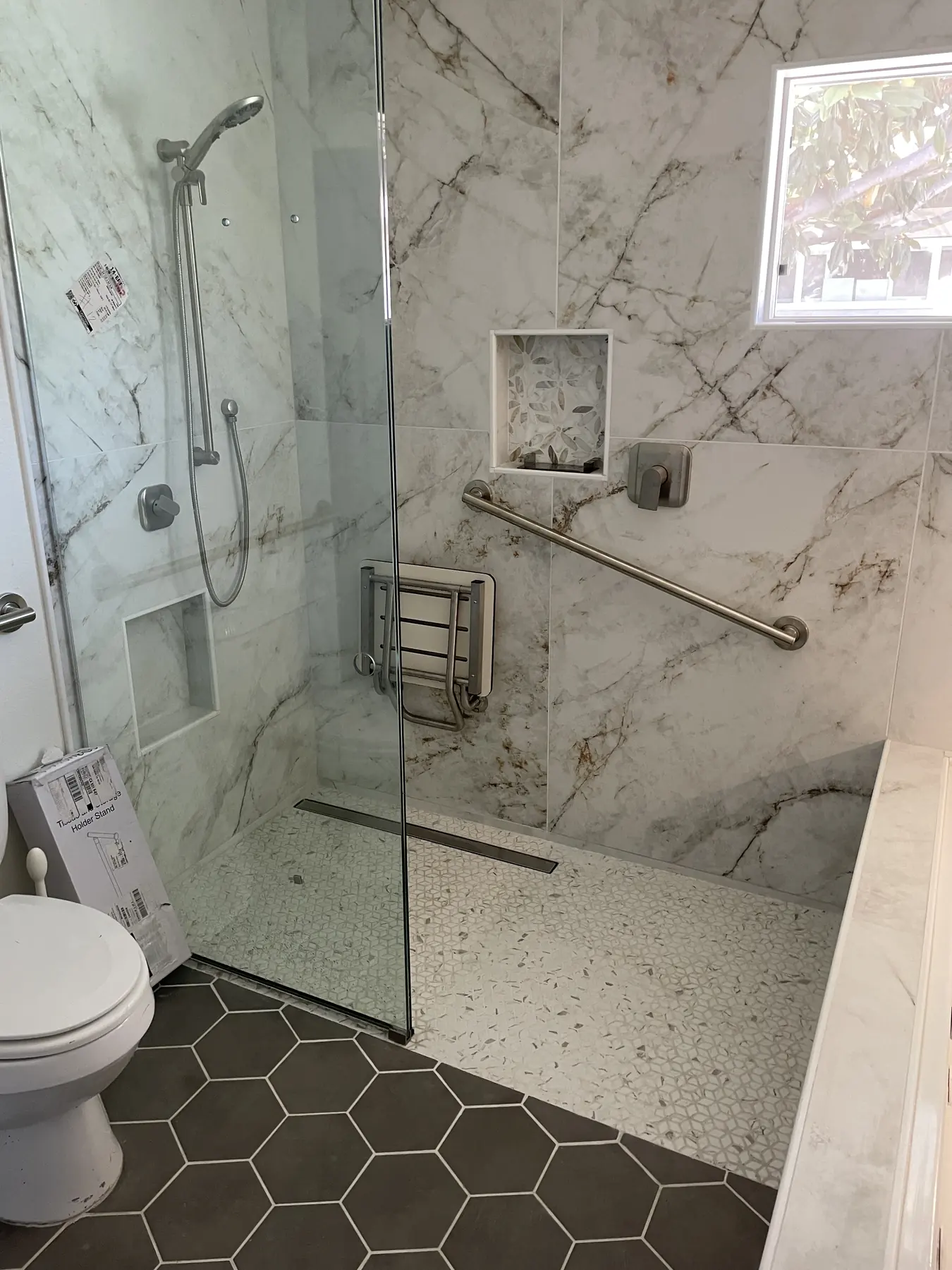
The bathroom is one of the most common places for falls at home, and it's usually the first room that stops working when someone's knees, hips or balance change. The good news is that an accessible bathroom doesn't have to look like a hospital. Done well, it just looks like a nice, open bathroom that happens to be easy to use.
Here's what goes into an aging-in-place bathroom, and what it costs in San Diego.
The curbless shower
The biggest single change is getting rid of the step into the shower.
- A curbless (roll-in) shower has no lip at all. You can walk, roll a shower chair or a wheelchair straight in.
- To keep water in the shower without a curb, the floor is recessed or re-sloped toward the drain. On a slab, that can mean cutting and re-pouring part of the floor; on a raised floor, lowering the framing.
- A linear drain (a long, narrow drain along one edge) makes the slope simpler and lets you use large tiles.
- Converting a tub to a roll-in shower is one of the most common requests, and it's very doable.
In one San Diego accessible bathroom, Greg built a true roll-in shower and sloped the main floor slightly toward it, so water from the shower or tub never runs out into the room.
Grab bars, done right
Grab bars only work if they're anchored into solid wood. Towel bars and suction-cup bars are not grab bars.
- During a remodel, add blocking in every wall around the toilet, shower and tub, even where you don't want a bar today. Bars can go up later without opening the wall.
- Grab bars should be rated to hold a person's full weight; the ADA standard is 250 pounds.
- There are good-looking bars now, in the same finishes as faucets, plus combination bars that double as towel bars or shelves.
Room to move
- Doorways: at least 32 inches of clear opening for a wheelchair or walker; widening a door is usually a framing job, not a huge one.
- Turning space: about 5 feet across lets a wheelchair turn around.
- Vanity: an open space under the sink lets someone sit or roll up to it. Greg has built vanities that convert, with doors that come off and a bottom that slides out when a wheelchair is needed.
- Toilet: a comfort-height toilet (about 17–19 inches) is easier to get on and off.
The small things that matter
- Slip-resistant tile on the floor and in the shower.
- A fold-down shower seat anchored to blocking.
- A handheld shower on a slide bar, usable seated or standing.
- Lever handles instead of knobs, for faucets and doors.
- Good lighting, including a night light path from the bedroom.
What it costs in San Diego
Most accessible bathroom conversions run $15,000–$25,000. The biggest variables are whether the shower goes curbless (and how much floor has to be re-sloped), whether doorways need widening, and the tile and fixtures you choose.
Plan before you need it
The best time to build an aging-in-place bathroom is before anyone needs it: during a remodel you'd do anyway, or when you're planning to stay in the house for the long run. Retrofitting after a fall is harder and more stressful.
Greg builds curbless showers, re-slopes floors, adds blocking for grab bars and builds wheelchair-ready vanities throughout San Diego County. See more about accessible bathroom remodels.
